Forgery: deception as miniature art
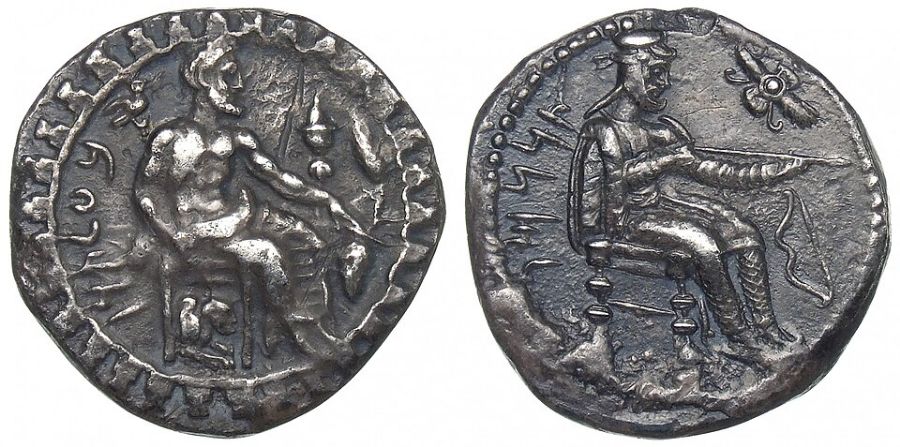
The line that begins with “The Practice of Forgery in Ancient Times” (1999) runs through the Turkish presentation “Forgery in Ancient Coins and the Development of Coinage” (2021) to the paper “Silver Plating of Coins in Antiquity: New Evidence” (2026). Tahberer reads the abundance of plated staters struck at Tarsos under the Persian satrap Datames as a deliberate satrapal policy for paying mercenaries from western Anatolia — and yet adds that, although once used to deceive, they are exceptionally beautiful examples of miniature art. Two bronze coins of Tarsos prepared for silver plating and never plated are the newest evidence in that debate.
Treasure hunting and responsibility
The presentation “Treasure Hunting in Türkiye” (2022) and the story “Defineci” (Treasure Hunter, 2014) enter the same question through two doors, one documentary and one fictional. Every coin torn from its archaeological context is a line erased from a city's history. In the introduction to the Herman Collection catalogue (2020), Tahberer describes the collector as “only a custodian” and praises the donation of the collection to a museum — a summary of his ethics of collecting.
Turkish as a language of science
“Linguistic Imperialism and Turkish” and “The Importance of Language for Social Development” (Bilim ve Ütopya, 2007) argue that science should be done in one's own language rather than in borrowed terms. The argument takes concrete form in the 2021 Sikkeloji series and the 2026 Nisibis study: the proposal to say “geçer” instead of “sikke” for coin, and a new approach using Turkish alternatives against what he calls the one-sided, Western-centred interpretation of ancient history.
Who writes history?
“A Critical Perspective on the General Notion of Ancient Greek Civilization” (Bilim ve Ütopya, 2006) proposes rebalancing the dominant narrative that treats ancient Greece as the sole source, by weighing the contributions of Anatolia and the Near East. His talks “Rethinking the Historical Divide: Relations of Turks and Greeks” at Western Washington University (2006) and the Turkish-Canadian Society (2008), and his notes on the history of translation, continue the same question: can history be an instrument of mutual understanding?